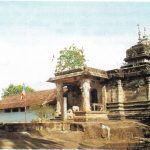
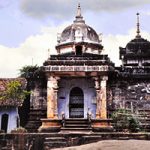
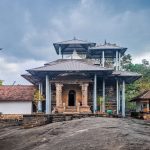
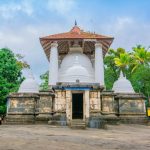
Gadaladeniya Rajamaha Vihara stands as one of the most remarkable and culturally significant Buddhist monuments in Sri Lanka. Renowned for its unique origins and architectural splendour, it is the largest fully completed Buddhist shrine in the country constructed entirely of granite. Built in 1344 CE, during the reign of King Buwanekabāhu IV of the Kingdom of Gampola (1341–1415 CE), the temple reflects a remarkable collaboration between South Indian and Sri Lankan communities.
Historical records reveal that the construction of this sacred site was a collective effort involving Sinhalese and Tamil communities alike. Kings, sub-kings, princes, commanders, ministers, officials, judges, scribes, soldiers, and individuals representing all castes—both high and low—played a role in establishing this monumental shrine. Their joint participation highlights the temple’s enduring legacy as a symbol of religious coexistence, social harmony, and cultural unity.
Although Gadaladeniya Vihara is a Buddhist monastery, its architectural design is predominantly South Indian Dravidian, reflecting the close cultural ties between India and Sri Lanka during this period. The principal architect, Ganeśvarācāri, was a skilled artisan from Andhra Pradesh, South India, who, along with nearly one thousand Dravidian craftsmen and local Sri Lankan artisans, helped construct the shrine. While its outer appearance resembles a South Indian Hindu temple—complete with carvings of Hindu deities and iconographic motifs—the interior enshrines magnificent Buddhist statues crafted in artistic styles that mirror Hindu sculptural traditions.
A smaller shrine dedicated to God Viṣṇu, located within the same building, further illustrates the spirit of inclusivity. While Buddhists venerate the Buddha in the main shrine, Tamil Hindus historically worshipped Viṣṇu here, embodying a profound example of interreligious harmony practiced within a single sacred space.
Gadaladeniya Vihara is also deeply embedded in Sri Lanka’s historical and literary traditions. It is mentioned in major chronicles such as the Mahāvaṃsa and has been revered across centuries despite political transitions. Numerous kings undertook renovations, ensuring its preservation and prominence as a leading Buddhist monastery. The vihara was the residence of four Supreme Patriarchs (Saṅgharāja) of the Sri Lankan Buddhist monastic community—an honour unmatched by any other temple. Furthermore, it served as the centre of the renowned Dharmakīrti monastic lineage, which made significant contributions to Buddhist scholarship and literature.
Recognizing its immense historical, cultural, and archaeological importance, the Gadaladeniya Vihara was officially declared a protected archaeological monument in Gazette No. 10928 dated 11.05.1956.
Constructed in the early fourteenth century, Gadaladeniya Vihara remains a monumental testament to the religious and cultural exchanges between India and Sri Lanka. The temple continues to stand as a powerful symbol of unity, architectural brilliance, and spiritual devotion—preserving a shared heritage cherished by generations.